
Navigating the World of Commercial Real Estate Attorneys: A Guide
Why Commercial Real Estate Legal Guidance Matters for Your Business

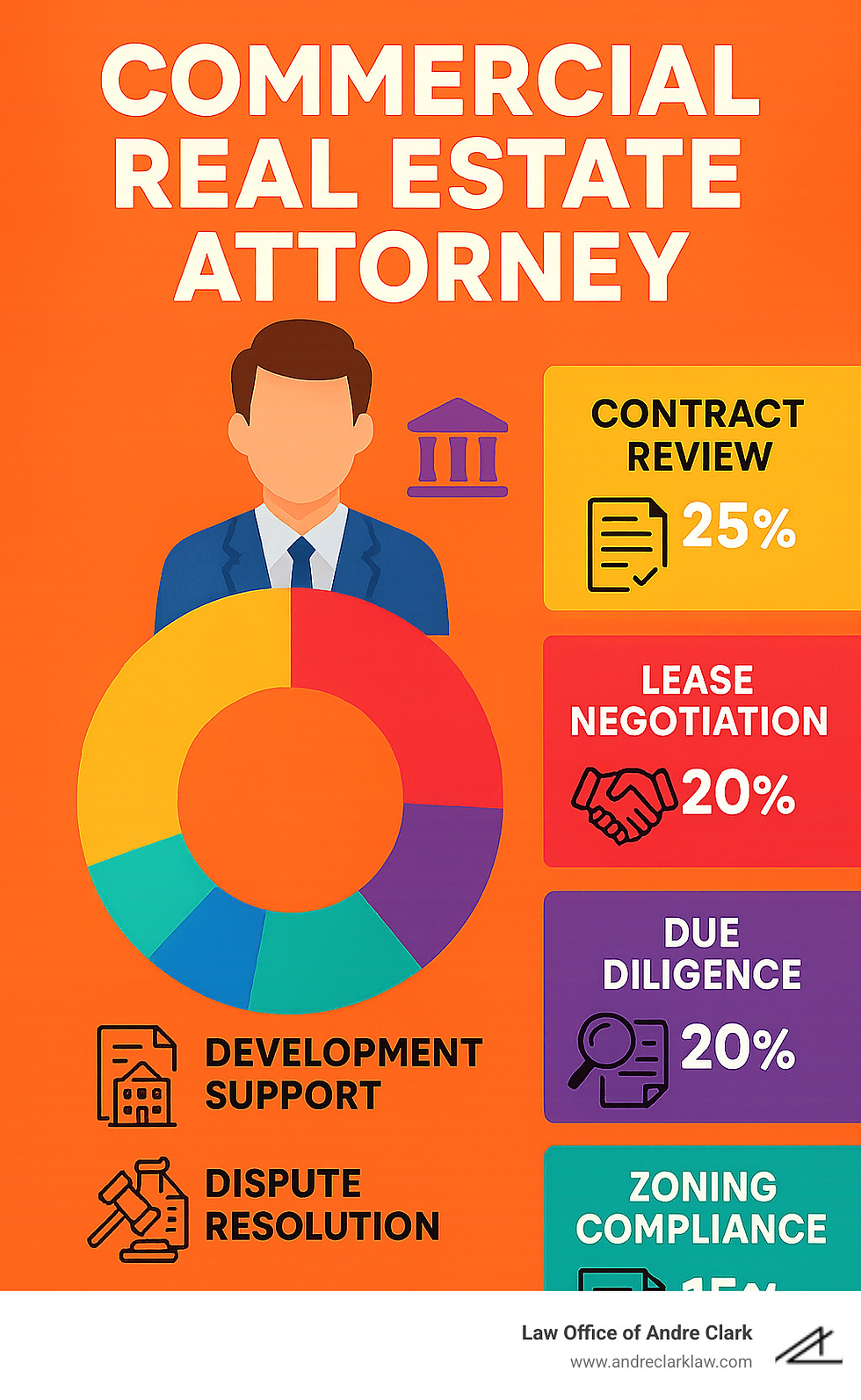
A commercial real estate attorney helps businesses steer property transactions, lease agreements, and regulatory compliance. Here's what they do:
• Contract Review & Negotiation - Draft and review purchase agreements, leases, and financing documents
• Due Diligence - Investigate property titles, zoning restrictions, and environmental issues
• Transaction Support - Guide buyers and sellers through closings and property transfers
• Compliance Assistance - Ensure deals meet local, state, and federal regulations
• Dispute Resolution - Handle conflicts over contracts, boundaries, or lease terms
Commercial real estate deals involve millions of dollars and complex legal requirements. Unlike residential transactions, commercial properties face stricter zoning laws, environmental regulations, and financing rules.
The stakes are high. A missed deadline, unclear contract terms, or regulatory oversight can cost your business significant money and time. Whether you're buying your first office building, negotiating a retail lease, or developing land, having skilled legal guidance protects your investment.
Mid-career professionals and business owners often find themselves overwhelmed by the legal complexities of commercial real estate. The paperwork alone can be daunting, and the consequences of mistakes are serious.
This guide will help you understand when you need a commercial real estate attorney, what services they provide, and how to choose the right legal counsel for your specific situation.

What is a Commercial Real Estate Attorney?
A commercial real estate attorney is your legal guide through the complex world of business property transactions. Think of them as the person who makes sure you don't step on any legal landmines when you're buying that office building or negotiating a warehouse lease.
Unlike lawyers who handle home purchases, these attorneys focus on business and investment properties. We're talking about office buildings, retail spaces, warehouses, industrial facilities, and apartment complexes with multiple units. The legal landscape for these deals is much more complicated than buying a house.
The day-to-day responsibilities of a commercial real estate attorney involve drafting and reviewing contracts that can run dozens of pages long. They ensure every transaction follows the maze of regulations that govern commercial property deals. More importantly, they protect your financial interests when millions of dollars are on the line.
These attorneys bring deep knowledge of property law, zoning regulations, environmental compliance, and commercial financing structures to every transaction. They know which permits you need for different types of developments and how to work with local municipalities. They understand the intricate web of state and federal regulations that can make or break a deal.
The role goes far beyond closing deals. Many commercial real estate attorneys become long-term advisors to their clients. They help with ongoing property management issues, handle lease disputes, and provide guidance on future expansion plans. They bridge the gap between complex legal requirements and practical business needs.
Commercial real estate law involves numerous federal regulations, including environmental protection requirements that can significantly impact property transactions. Understanding these compliance requirements is crucial for any commercial property deal.
At the Law Office of Andre Clark, we handle commercial real estate matters with experience in Greater Los Angeles and throughout California. Our approach focuses on making complex legal processes understandable while protecting your business interests every step of the way.

Key Services Offered by Commercial Real Estate Attorneys
When you're dealing with commercial property, you need someone who understands the ins and outs of complex transactions. A commercial real estate attorney handles a wide range of services that go far beyond what you'd see in a typical home purchase.
Contract Review and Drafting
Commercial real estate contracts can be intimidating. We're talking about documents that might run 50+ pages, packed with clauses about environmental assessments, financing contingencies, and detailed property inspections. Every single line matters when millions of dollars are on the table.
Contract review involves more than just reading through the paperwork. Attorneys examine each provision to make sure you understand exactly what you're agreeing to—and what the other party is promising in return. They catch potential problems before they become expensive headaches.
When standard contracts won't work, attorneys draft custom agreements custom to your specific situation. This might include joint venture agreements for property development, management contracts for ongoing operations, or unique financing arrangements that protect your interests.
Lease Negotiation
Commercial leases are a whole different animal from residential rentals. These agreements often run for 10, 20, or even 30 years, with rent payments that can make or break a business.
Lease negotiation involves hammering out details like rent escalation clauses, who pays for what maintenance, and what happens if you need to get out early. The difference between a good lease and a bad one can cost you hundreds of thousands of dollars over time.
Attorneys also handle the ongoing lease issues that pop up—modifications when your business needs change, renewals when your term is up, and assignments when you need to transfer your lease to someone else. Understanding whether you're dealing with a triple net lease, gross lease, or something in between requires legal knowledge that protects you from surprise costs.
Title Insurance and Property Research
Before you buy any commercial property, someone needs to dig deep into its history. Title research involves reviewing property deeds, survey records, and municipal filings to make sure the seller actually owns what they're selling—and that there aren't any nasty surprises lurking in the background.
This process often uncovers liens, easements, or restrictions that could affect how you use the property. Maybe there's an old utility easement running through your planned parking lot, or perhaps the previous owner still owes back taxes.
Title insurance for commercial properties is typically customized to address the specific risks finded during research. Attorneys work with title companies to negotiate coverage that protects you from future legal challenges to your ownership.
Zoning Laws and Land Use
Just because you own a piece of property doesn't mean you can do whatever you want with it. Zoning compliance is crucial—local ordinances dictate whether you can run a restaurant, build a warehouse, or convert an office building to apartments.
When current zoning doesn't allow your intended use, attorneys help pursue zoning variances or special use permits. This process involves working with planning commissions, attending public hearings, and sometimes dealing with concerned neighbors who might oppose your plans.
The approval process for new construction or major renovations can be complex, involving environmental clearances, accessibility compliance, and multiple layers of municipal review.
Real Estate Development
For clients taking on development projects, attorneys provide comprehensive support from start to finish. Development work involves structuring partnerships, negotiating construction contracts, and obtaining the mountain of permits required for new construction.
The financing side alone can be mind-boggling—construction loans, permanent financing, and investor agreements that spell out how profits and risks get divided among everyone involved. Getting these structures right from the beginning prevents costly disputes down the road.
Development attorneys also handle the ongoing compliance issues that arise during construction, from environmental monitoring to ensuring contractors meet their obligations under complex agreements.
Why You Need a Commercial Real Estate Attorney
Legal Protection and Risk Management
When you're dealing with commercial real estate, you're not just buying or leasing a building—you're making a major business decision that could affect your company for years to come. A commercial real estate attorney serves as your shield against the countless legal pitfalls that can turn a promising investment into a financial nightmare.
Think about it: commercial properties often come with hidden issues that aren't immediately obvious. Environmental contamination from previous tenants, survey problems that affect property boundaries, or missing permits that could shut down your operations. An attorney with experience in commercial real estate knows exactly what to look for and how to protect you before you sign on the dotted line.
The protection goes far beyond just the initial purchase or lease. Smart legal counsel helps structure your deals to keep your personal assets separate from property-related risks. This means if something goes wrong with the property, your other business interests and personal wealth stay protected.
Transaction Complexity
Let's be honest—commercial real estate deals can make your head spin. Unlike buying a house, these transactions often involve a cast of characters that would make a Broadway show jealous. You've got buyers, sellers, multiple lenders, investors, contractors, and various government agencies all trying to get their piece of the puzzle to fit.
Commercial financing alone can be a maze of loan documents, personal guarantees, and reporting requirements that seem designed to confuse even seasoned business owners. An attorney helps you understand what you're actually agreeing to and negotiates terms that won't handcuff your business operations down the road.
The coordination required to keep everyone on track and meet all the deadlines is where legal oversight becomes invaluable. Miss a key deadline or overlook an important requirement, and you could lose your deposit or face serious legal consequences.
Regulatory Compliance
Here's where things get really interesting (and by interesting, we mean potentially expensive). Commercial properties must dance to the tune of federal, state, and local regulations that seem to multiply faster than rabbits.
Environmental laws require extensive investigation to make sure you're not inheriting someone else's contamination problems. The Americans with Disabilities Act has accessibility requirements that could trigger costly renovations if you're not careful. And don't get us started on the various zoning and building codes that can vary dramatically from one municipality to another.
An attorney with experience in commercial real estate stays on top of these changing regulations and helps you maintain compliance throughout your ownership. When new rules come into play, they'll help you understand what they mean for your property and develop practical ways to stay compliant without breaking the bank.
Long-term Strategic Planning
A good commercial real estate attorney becomes more than just someone who reviews contracts—they become a trusted advisor who understands your business goals and helps you make property decisions that support your long-term success.
They understand how different ownership structures affect your tax situation and can help you choose approaches that keep more money in your pocket. Whether you're planning for future expansion, considering additional properties, or thinking about eventual exit strategies, having legal counsel who knows your business makes all the difference.
The right attorney also helps you structure lease agreements and ownership arrangements that can grow with your business. This forward-thinking approach saves you from having to renegotiate everything when your needs change.

How to Choose the Right Commercial Real Estate Attorney
Finding the right commercial real estate attorney can make the difference between a smooth transaction and a costly nightmare. The process doesn't have to be overwhelming if you know what to look for.
Experience and Track Record
Your attorney's background matters more than you might think. Someone who regularly handles office building purchases will spot different red flags than an attorney who primarily works with industrial properties or retail developments. When you're interviewing potential attorneys, ask about their recent transactions that are similar to yours.
Don't be shy about requesting references from past clients. A confident attorney will gladly connect you with previous clients who can share their experiences. These conversations often reveal how the attorney handles pressure, communicates during stressful negotiations, and solves unexpected problems.
Local knowledge is equally important. Commercial real estate law changes dramatically from city to city, and even between counties. An attorney who regularly works in your area understands the local regulations, knows the key municipal officials personally, and has established relationships with other professionals you'll need during your transaction.
Firm Size and Resources
The size of the law firm you choose depends on your specific needs and preferences. Large firms often have attorneys who handle different aspects of commercial real estate law, which can be valuable for complex transactions involving environmental issues, zoning challenges, and intricate financing arrangements.
Smaller firms offer different advantages. You'll likely work directly with senior attorneys rather than being passed off to junior associates. The communication tends to be more personal, and you might find more flexible fee arrangements that work better for smaller transactions.
Consider your comfort level too. Some business owners prefer the resources and prestige of a large firm, while others value the personal attention and accessibility that smaller practices provide.
Cost Considerations and Fee Structures
Legal fees for commercial real estate work typically follow one of two structures: hourly rates or flat fees for specific services. Hourly rates can range from $300 to $800 per hour, depending on the attorney's experience and your transaction's complexity.
Flat fees work well for routine matters like straightforward property purchases or standard lease reviews. However, complex deals with multiple parties or unusual circumstances usually require hourly billing because the time investment is harder to predict.
Ask for detailed fee estimates based on your specific situation. Make sure you understand what services are included in any quoted fees and what additional costs might arise. Some attorneys charge separately for things like document review, title research, or coordination with other professionals.
Communication Style and Availability
Your attorney should be able to explain complex legal concepts in terms that make sense for your business. Some attorneys excel at detailed written summaries, while others prefer quick phone calls to keep you updated. Choose someone whose communication style matches your preferences.
Response time matters tremendously in commercial real estate. Deals often have tight deadlines, and you need legal counsel who can provide timely advice when issues arise during negotiations. Ask potential attorneys about their typical response times and how they handle urgent matters.
The best commercial real estate attorney for your situation is someone who combines relevant experience with a communication style that works for you, all at a fee structure that makes sense for your transaction. Take time to interview a few attorneys before making your decision – this relationship often extends well beyond your initial transaction.
Frequently Asked Questions about Commercial Real Estate Attorneys
What does a commercial real estate attorney do?
A commercial real estate attorney handles the legal side of property deals while keeping your business interests front and center. Think of them as your legal guide through the maze of commercial property transactions.
Negotiation is a huge part of what they do. Whether you're buying an office building or signing a long-term lease, your attorney works to get you the best possible terms. They know which contract clauses can hurt you down the road and which ones protect your investment.
Compliance might sound boring, but it's where attorneys really earn their keep. Commercial properties face a web of regulations - from environmental laws to zoning restrictions to accessibility requirements. Your attorney makes sure you don't accidentally break rules that could cost you thousands later.
Most importantly, they protect client interests throughout every step of the process. They review those thick contracts so you don't have to, spot potential problems before they become expensive headaches, and coordinate with lenders, title companies, and other professionals to keep your deal moving forward.
How much does a commercial real estate attorney charge?
Attorney fees depend on what you need and how complicated your situation is. A simple lease review might run $1,000 to $3,000, while buying a complex commercial property could involve legal fees of $10,000 to $50,000 or more.
Transaction complexity plays a big role in costs. Reviewing a straightforward office lease takes less time than handling a multi-million dollar development project with environmental issues and zoning challenges. More moving parts mean more legal work.
Location matters too. Attorneys in Greater Los Angeles typically charge more than those in smaller California markets, but they also understand local regulations better. That local knowledge often saves you money by preventing costly mistakes and delays.
Many attorneys offer flat fees for routine work like lease reviews or simple purchases. Complex deals usually get billed hourly, with rates ranging from $300 to $800 per hour. The investment is usually worth it when you consider the financial risks involved in commercial real estate.
Do I need a commercial real estate attorney for buying property?
While California doesn't legally require you to hire a commercial real estate attorney for property purchases, it's one of those "technically optional but practically essential" situations.
Legalities in commercial real estate are far more complex than residential deals. You're dealing with environmental assessments, zoning compliance, complex financing arrangements, and contracts that can run dozens of pages. Miss something important, and it could cost your business significant money.
Transaction support goes beyond just reviewing paperwork. Your attorney coordinates with multiple parties, ensures deadlines are met, and handles the countless details that can derail a deal. They also structure transactions to protect your other business assets from potential liability.
Due diligence is where attorneys really shine. They investigate title issues, review survey discrepancies, analyze environmental reports, and identify potential problems before you're committed to the purchase. Think of it as insurance for your investment.
The legal fees are typically a small percentage of your total transaction cost, but the protection and guidance you get can prevent problems that cost far more than the attorney's bill.

Conclusion
Making smart commercial real estate decisions starts with having the right legal guidance on your side. A qualified commercial real estate attorney does more than just review paperwork—they become your strategic partner, helping you steer complex transactions while protecting your business from costly mistakes.
The stakes in commercial real estate are simply too high to go it alone. Whether you're signing your first office lease or purchasing a multi-million dollar property, having experienced legal counsel ensures you understand exactly what you're agreeing to and how it affects your business long-term.
The Law Office of Andre Clark handles commercial real estate matters throughout California, with convenient locations in Greater Los Angeles, Orange County, and San Bernardino. Our team brings experience in transaction support, contract negotiation, and regulatory compliance to every client relationship.
We understand that every business has unique needs and goals. That's why our client-centered approach focuses on providing practical, results-driven legal services that help you achieve your real estate objectives while minimizing legal risks and unexpected complications.
From due diligence investigations to complex development projects, we guide clients through every aspect of commercial real estate law. Our team takes the time to explain complex legal concepts in plain English, so you can make informed decisions with confidence.
Don't let legal complexities derail your commercial real estate plans. Having the right attorney on your team from the start can save you significant time, money, and stress while ensuring your transaction proceeds smoothly toward a successful closing.


Comments